
Nap Transitions: What to expect (and what to avoid) at every stage
Jump to your stage → 3-Nap Schedule · 3-to-2 Nap Transition · 2-to-1 Nap Transition · Dropping the Nap
Nap transitions can feel like one of the more confusing and stressful parts of baby and toddler sleep. Some babies may show clear-cut signs that they’re ready to drop a nap, but a lot of times, it can feel like trial and error getting them on a nap schedule that works for them.
Nap transitions are developmental, and while there are general age ranges when they tend to happen, your child's individual sleep needs matter more than the number of months on the calendar.
Let’s take a look at what to expect with each major nap transition, along with some of the biggest pitfalls to avoid along the way.
How to Create the Perfect Baby Nap Schedule
When I create sleep schedules for my clients, I start with an outline based off middle-to-high sleep needs, because I’d rather build a day that offers your baby the opportunity for more rest, and then adjust based on how they do.
If we start small (let’s say with two 30-minute naps), we might never know that your baby could take a longer nap with the right setup. But if we aim for more and they consistently take less, we can adjust from there with confidence in their needs.
Here’s a general idea of total sleep needs by age, including naps:
0-3 months: ~14-17 hours
4-11 months: ~12-15 hours
1-2 years: ~11-14 hours
3–5 years: ~10–13 hours
REMEMBER: These are ranges, not mandates.
Creating the first 3-nap schedule
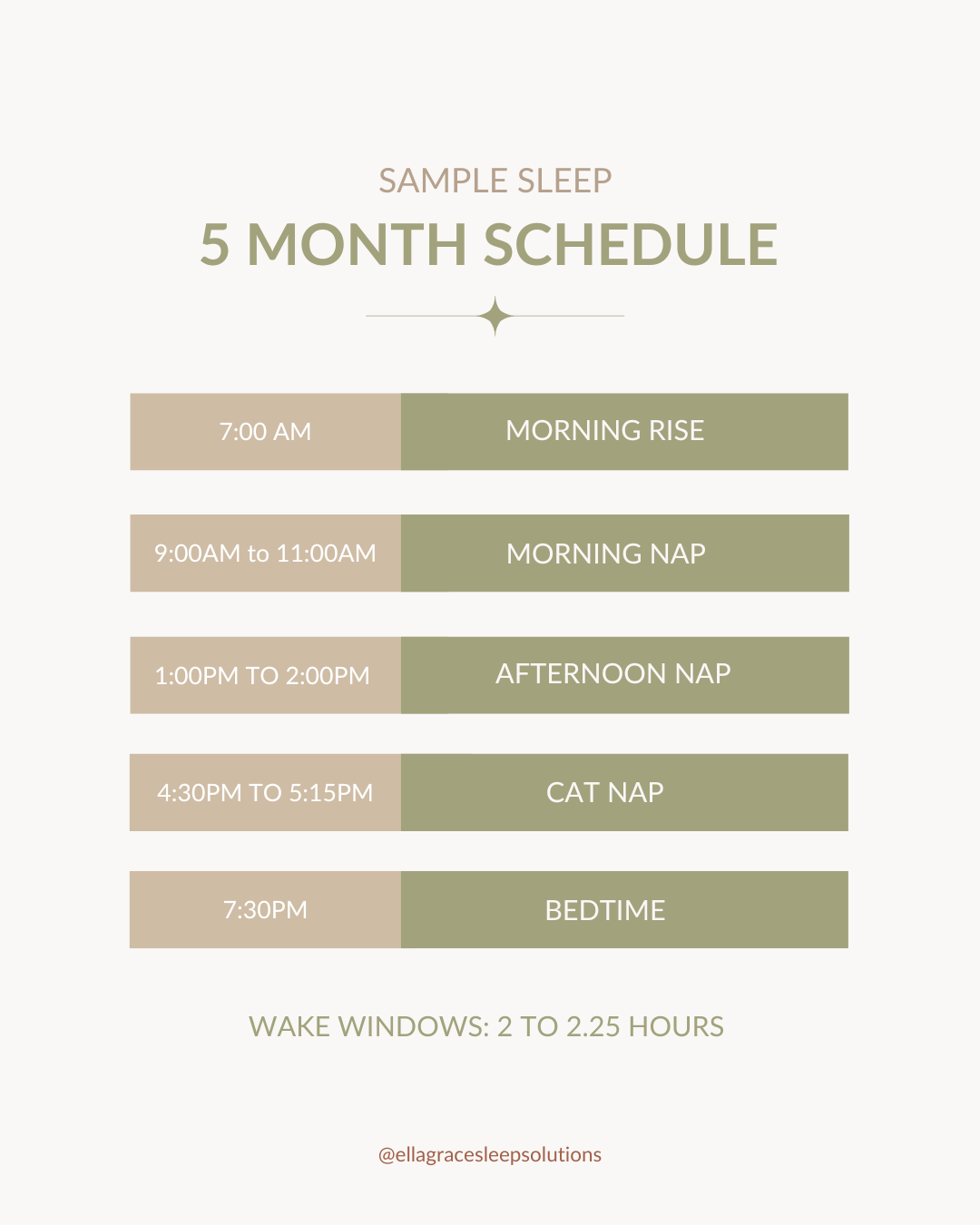
Around 4–5 months, many babies are ready to start moving toward a more predictable three-nap schedule.
This is also around the time that I recommend moving away from the constant calculating of wake windows and toward a clock-based schedule, with naps happening around the same time each day.
So what does a typical 3-nap day look like?
Around the 3-5 month mark, you'll generally have:
Two longer, more restorative naps
A shorter third nap to bridge the gap to bedtime
A bedtime window within 30 minutes
Naps happening at predictable times rather than constantly shifting based on the last wake-up
Common 4-5 Month Nap Schedule Mistakes
Trying to make every nap the same length: The third nap is often shorter, and that's okay. It doesn't need to be another two-hour nap! A small cat nap to get you to bedtime will do just fine.
Obsessing over wake windows:Wake windows can be helpful, but they don't need to become a constant math equation in your brain. As your baby gets older, they can tolerate more awake time, their sleep becomes more predictable, and a clock-based schedule will bring more consistency to your day.
Changing the entire schedule after one bad nap:If your baby takes a short nap, you don't have to immediately shift the next nap or throw the entire schedule out the window. Instead, do your best to hold out until the next planned nap time. Over time, your baby will adjust, and the clock-based schedule will create so much predictability around when sleep happens for your baby.
The 3-to-2 nap transition
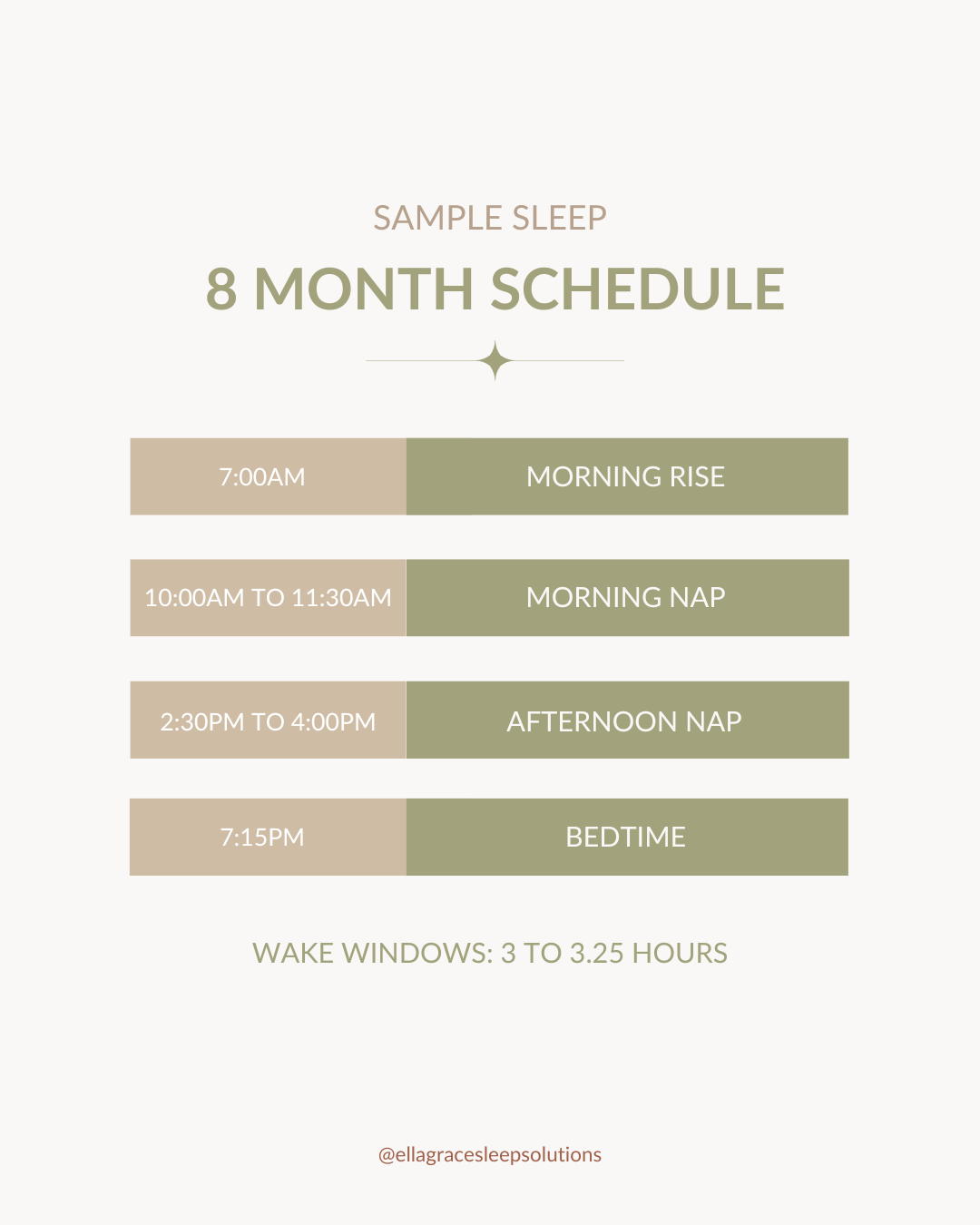
The transition from three naps to two typically happens somewhere around 6.5–9 months, with many babies making the transition around 7 months.
This one can be a little tricky because there's often an awkward period where your baby clearly isn't happy with three naps anymore, but two naps don't quite seem to get them through the day.
Signs your baby may be ready:
Along with the appropriate age range, here are some clues that your baby might be ready to ditch that third nap:
Fighting or skipping the third nap. If they do take a catnap, bedtime gets pushed later into the evening.
Early morning wakings/less nighttime sleep.
Naps are starting later and the schedule feels all over the place.
Resisting naps and bedtime, even though they “should” be ready for sleep.
One or two of these signs isn’t a guarantee. But if you’re seeing a pattern, especially over several days, it’s worth considering a transition.
Common Two Nap Schedule Mistakes
Keeping the third nap too long: In the beginning of the transition, you might have a few days where nap two ends at 2 PM and you're thinking, Okay...what exactly am I supposed to do until bedtime?
A short catnap can absolutely be useful during the transition! But after about a week or so, the goal is generally to move away from that third nap and settle into a true two-nap schedule so those two naps can consolidate.
Protect the first nap: The biggest mistake I see is allowing the first nap to happen too early. If nap one happens too early, nap two happens too early. Then you're stuck needing another nap to make it to bedtime, and suddenly you're never actually settling into a two-nap schedule. Instead, work toward appropriately spacing that first nap and allowing your baby's sleep pressure to build.
A note from me: a clock-based schedule can be particularly helpful here because you're working toward predictable nap times rather than constantly moving the day earlier based on the previous nap.
The 2-to-1 nap transition
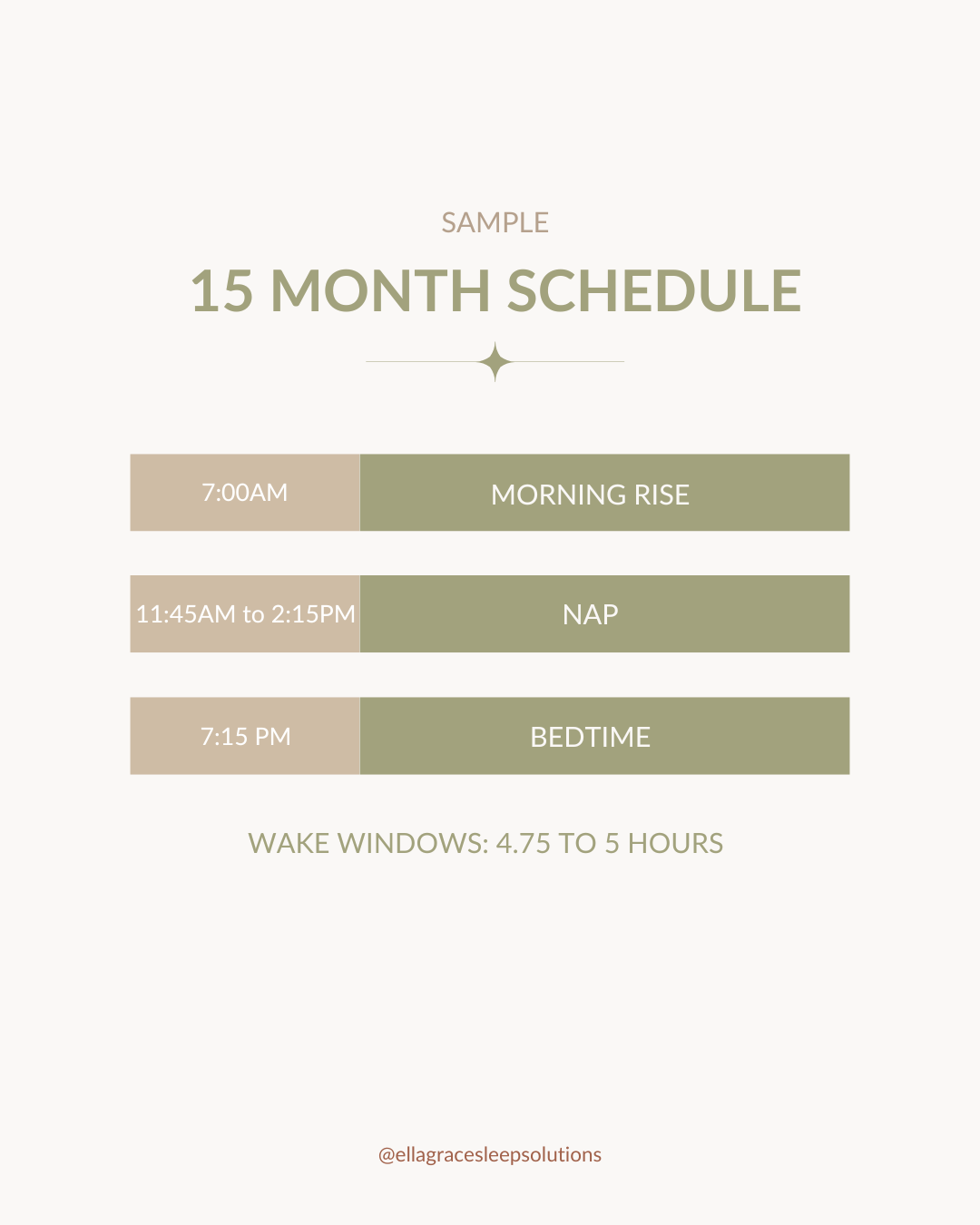
The transition from two naps to one typically happens around 13–16 months, although there's plenty of individual variation based on your baby’s sleep needs.
This transition is less about simply deleting a nap and more about gradually consolidating your child's daytime sleep into one nap in the middle of the day.
Why not 12 months?
Many parents look forward to the one-nap transition, and while it can make 12-month-old nap schedules simpler, if your baby isn’t ready, it will actually make sleep more difficult.
Most babies still need two naps at 12 months old and snd do best holding onto two naps until closer to 14–15 months.
Signs your toddler may be ready:
Look for patterns like:
Consistently resisting one of their two naps
One nap interfering with the other
Bedtime becoming later and increasingly difficult
Early morning wakings are happening more frequently
Your toddler comfortably handling a longer morning wake period
Skipping the second nap doesn’t cause a meltdown at bedtime (that’s a huge one!)
Common One Nap Schedule Mistakes
Keeping the nap too early: In the beginning, the remaining nap may need to happen earlier than you'd ultimately like, but over time, you'll want to gradually move it toward the middle of the day. An early nap followed by a very long afternoon can contribute to early mornings and make the entire schedule harder to sustain.
Give the nap time to lengthen: Your toddler might initially take a one-hour nap after dropping the morning nap. Don't panic.
It's very normal for that nap to gradually lengthen as their body adjusts. With time, it may shift closer to two hours. Quality nourishment and/or milk before the nap and a solid wind-down routine will help.
Putting them in pajamas before the nap can be surprisingly helpful. Toddlers are not always interested in the concept of “now we are going to rest,” but pajamas are a pretty clear clue.
How to drop the nap completely
Most children drop their nap somewhere around 3–5 years, but age alone isn't a reason to stop offering one. Some children are ready earlier, while others need that midday sleep for a while longer.
As a general framework:
All two year olds benefit from a nap.
Most three year olds benefit from a nap.
Some four year olds benefit from a nap, but by this point, many have dropped it.
Signs your child may be ready:
You may notice:
Consistently refusing to nap
Spending the entire nap period awake but remaining relatively happy
The nap makes bedtime significantly harder
Nighttime sleep becoming shorter because of the nap
Your child naps and comfortably stretches until bedtime
Common Toddler Nap Schedule Mistakes
Assuming nap refusal means they're done: A toddler or preschooler refusing their nap doesn't necessarily mean they no longer need one. There can be periods of nap resistance that eventually pass.
Instead of immediately eliminating the nap, look at the bigger picture: What is happening with nighttime sleep? How is your child handling the afternoon? And how much total sleep are they getting in a 24-hour period?
If they're no longer sleeping, quiet time can be a helpful replacement for the nap!
The biggest things to avoid during ANY nap transition:
After working through a few nap transitions, you start to realize that the same mistakes might come up again and again.
Don't drop a nap based on age alone.
Age gives you a general idea of when a transition might happen. Your baby's actual sleep needs tell you when they're ready.
Don't make a huge schedule change because of one bad day.
One short nap does not mean your baby suddenly needs a new schedule. Look for consistent patterns.
Don't let fear of overtiredness dictate the entire schedule.
Overtiredness is real, but it is not an emergency. If you're constantly offering naps earlier and earlier because you're afraid your baby will become overtired, you may actually be taking away the sleep pressure they need to take a good nap.
Don't forget about sleep pressure.
Your baby needs enough time awake to build the drive to sleep. This is especially important during nap transitions, when you're asking them to stay awake for longer stretches.
Don't automatically move the entire day earlier after an early morning.
An early morning can tempt you to move nap one earlier, which moves nap two earlier, which moves bedtime earlier… and suddenly you're reinforcing the very early schedule you're trying to fix.
Don't focus so much on naps that you forget about nighttime sleep.
Naps and nighttime sleep are connected. If a new nap schedule gives you beautiful naps but suddenly wrecks nighttime sleep, it may not actually be the right schedule.
Don't assume your baby needs the same schedule as another baby the same age.
Your friend's 15-month-old may take a three-hour nap every day at 12:30 PM. Your 15-month-old may only sleep for 90 minutes. We don’t compare sleep needs!
So, how many naps does your baby need?
The right schedule isn't necessarily the one that looks best on paper.
The right schedule gives your child enough sleep and enough awake time to thrive through the day, sleep through the night, and keeps your family sane.
Nap transitions will rarely happen perfectly. There will be weird days, short naps, early bedtimes, and moments where you have absolutely no idea what you're doing. Many parents will stand in solidarity with you on that!
But with the right age ranges, paying attention to consistent patterns, and consistency, each nap transition WILL happen. I promise!

Hi, I'm Ella Grace!
Baby Sleep Consultant for NYC Families
Ella is an expert baby sleep consultant based in Brooklyn. Ella offers premier newborn, baby, and toddler sleep consultant services locally to New York City parents and virtually to parents across the globe, ensuring restful nights and happier families everywhere.
WORK WITH MEYou May Also Like:
🪐
You May Also Like: 🪐



free resources!Dive Deeper and Connect
Overthinking every nap? Wondering if it’s the four-month regression or just...your baby?
Sleeping with one eye open, waiting for the next waking?
I’ve bundled up my most-requested resources to help you feel grounded,
clear, and one step closer to better sleep—for everyone. Let’s dive in, together.