
How to Get Your Six-Month Old Sleeping Through The Night
The six-month mark can be such a fun time for you and your baby. Your baby is hitting big milestones, they’re showing off their personality, and you’re likely emerging from the newborn fog.
It’s easier to get out of the house, and you’re starting to find rhythms that work for both of you. Whether it’s a baby music class or a weekly coffee date with that new mom friend, you’re finding your stride!
But even in this exciting time, frequent night wakings might have you yawning and reaching for an extra coffee or two to get you through the day.
It’s time, my friend, for a 6 months sleep schedule that has everyone sleeping through the night.

Is it realistic for a 6-month-old to sleep through the night?
Yes! Six months is a developmentally appropriate time for babies to sleep through the night. Babies this age are capable of getting their calorie needs met during the day and sleeping 11-12 hours through the night without feeding.
But as we all know, it’s not always that easy. There are reasons beyond hunger that cause 6-month-olds to wake up in the middle of the night.
What’s with the midnight wake-up call?
At six months, your little one is becoming more aware of their surroundings—they’re grabbing, sitting up, teething, maybe crawling, and they might be developing some separation anxiety too.
All of these factors can contribute to your baby waking up through the night and having difficulty settling back to sleep.
Of course, every child is different, and there can be various reasons behind night wakings, but with so many developmental leaps at six months, it’s not uncommon for tired parents to reach out about sleep training.
Let’s take a closer look at the specific reasons your six-month-old might be waking up through the night and what you can do about it:
Hunger
Though most six-month-olds can comfortably sleep through the night, some still wake out of genuine hunger, especially if they’re not eating enough during the day.
What to do about a hungry baby:
If your baby is still feeding at night, this may be affecting their hunger during the day and reinforcing the nighttime wake/feed cycle. If your baby isn’t hungry or taking a quality feed in the morning, this is a sign that they’re ready to drop one or all nighttime feeds.
To drop nighttime feeds at 6 months:
Slowly reduce the amount they consume during night feeds. You can reduce ounces or minutes of the breast within a few days before removing the feed altogether and supporting back to sleep without milk. This option is best for young infants between 3-5 months or babies who are consuming excessive calories during the day and not feeding well at night.
Or drop the feed altogether. For older infants and younger toddlers, this is typically the best choice because they are likely getting what they need during the day and don't need a gradual weaning process.
Make sure to offer more ounces in daytime bottles and more nursing sessions. For exclusively breasting parents, consider pumping before bed to alleviate engorgement and prevent clogged ducts. Refer to an IBCLC if you have questions or concerns about supply.
If your pediatrician has recommended starting solids, your baby may be exploring different flavors and textures.
HOWEVER, solids aren’t always the solution to better nighttime sleep. The caloric density in solid foods is marginal at this age, and your baby’s primary nutrition still comes from breastmilk or formula.
If offering solids, do so 30 to 90 minutes after a milk feed. Note that solids can change digestive patterns and actually disrupt sleep, so be mindful of tummy discomfort, gas, or constipation.
Crib Confidence
At this age, babies become much more aware of how they fall asleep and look for these same supports when they rouse throughout the night. While sleep isn’t a skill to be taught (it’s a natural, biological process), how your baby finds sleep is learned. These cozy routines and gentle cues can be lovingly crafted to support peaceful nights for the whole family.
You have the choice of how you want your baby to fall asleep and back asleep during night wakings: quickly and easily on their own or with your help.
Sleep training isn’t all cry-it-out; it’s about teaching a valuable sleep skill that respects both your baby’s needs and your own.
How to sleep train at 6 months:
If your baby needs to be held, rocked, or nursed to sleep, consider helping them gain confidence in their sleep space. Incorporating some back rubs or deep pressure holds while they’re in their crib can help with this transition. Settling to sleep in the crib will help them confidently re-settle throughout the night and sleep longer stretches.
Consistency is key here!When they wake up, choose a consistent sleep time response. This might be rubbing their back, sitting by the crib, or checking in every five minutes.
Reminder: you can set loving limits when establishing independent sleep or self-soothing. You’re prioritizing better sleep for the whole family.
Teething Discomfort
The six-month mark is prime time for teething, and teething discomfort can mean your baby needs a bit more settling support at bedtime or in the middle of the night. Some babies are quite sensitive to teething discomfort, and others don’t show signs of teething at all.
What to do about teething discomfort at night:
If you plan to use meds for pain relief, time them with sleep. Lightly massaging their gums before bed with a clean finger can ease discomfort. During the day, allow your baby to chew on a frozen washcloth or offer cool foods like watermelon, cucumber, or frozen fruit in a mesh feeder.
Be confident in giving extra support if your baby isn’t feeling well. Teething discomfort peaks when the tooth cuts through the gum. Ask your pediatrician about Tylenol to ease discomfort overnight, and time medication 30-60 minutes before bedtime. You can get back on track when your baby is feeling better.
Note: Teething is rarely ever the culprit of weeks or months of sleep disruption. If that’s the case, there may be another reason causing a 6-month sleep regression.
Developmental Milestones
As mentioned earlier, your baby is busy working on gross motor milestones and more. Whether it’s rolling, grabbing, or babbling, these new skills can be so exciting that they want to practice them at night, and while that may be fun for them, it’s not so fun for you…
What to do about practicing motor skills at night:
Sensory input and stimulation are essential building blocks to consolidated nighttime sleep. Offer ample floor time during the day so baby can practice their skills and explore their environment.
Let your baby play in their crib during the day so they can gain confidence with their new mobility in their sleep space. Bonus: it makes the skill less exciting during sleep time.
Short or Poorly Timed Naps
Six-month-olds typically need two to three naps per day, with periods of 2.25 to 3 hours between sleeps. However, naps that are too close to bedtime or an inconsistent first nap time can lead to early morning wakings and/or nighttime restlessness.
What to do about an inconsistent nap schedule:
If possible,establish a predictable schedule of two or three naps and navigate towards a clock-based schedule, with naps happening around the same time every day.
Six-month olds typically need 2-3 hours of daytime sleep divided across naps. If naps are short, you may want to experiment with timing to find a length that works better for them.
Overstimulation Before Bedtime
Six-month-olds are often eager to explore their world, which means they’re easily overstimulated by too much activity, screen time, or even excitement from playtime close to bedtime.
What to do about overstimulation:
Establish a simple, predictable routine about 30-45 minutes before bed. This could include a warm bath, a lullaby, or quiet time with their favorite book. Begin dimming lights and keeping sounds low as part of the wind-down routine, signaling to their body that it’s time for rest.
Environmental Factors
Everything from room temperature to sunlight can affect your baby’s sleep quality. Six-month-olds are more aware of their surroundings, so even slight adjustments can make a difference.
What to do about environmental factors disrupting sleep:
A white noise machine can be a game-changer. It drowns out background noise so your baby isn’t startled awake by the outside world.
It might be time to invest in blackout curtains. Light is stimulating to the brain, so any sunlight creeping in can easily wake them up.
The ideal temperature for baby’s sleep environment is 68 to 72 degrees. Body temperature impacts not only sleep onset but also the sleep quality and the time spent in restorative sleep stages.
Of course, families live in different climates or travel, and babies can and do sleep soundly when dressed accordingly.
Oh, and get some good overnight diapers.
Sample 6-Month Sleep Schedule
If you want a practical example of how to approach sleep with a six-month old, here are two sleep schedules from two of my recent clients:
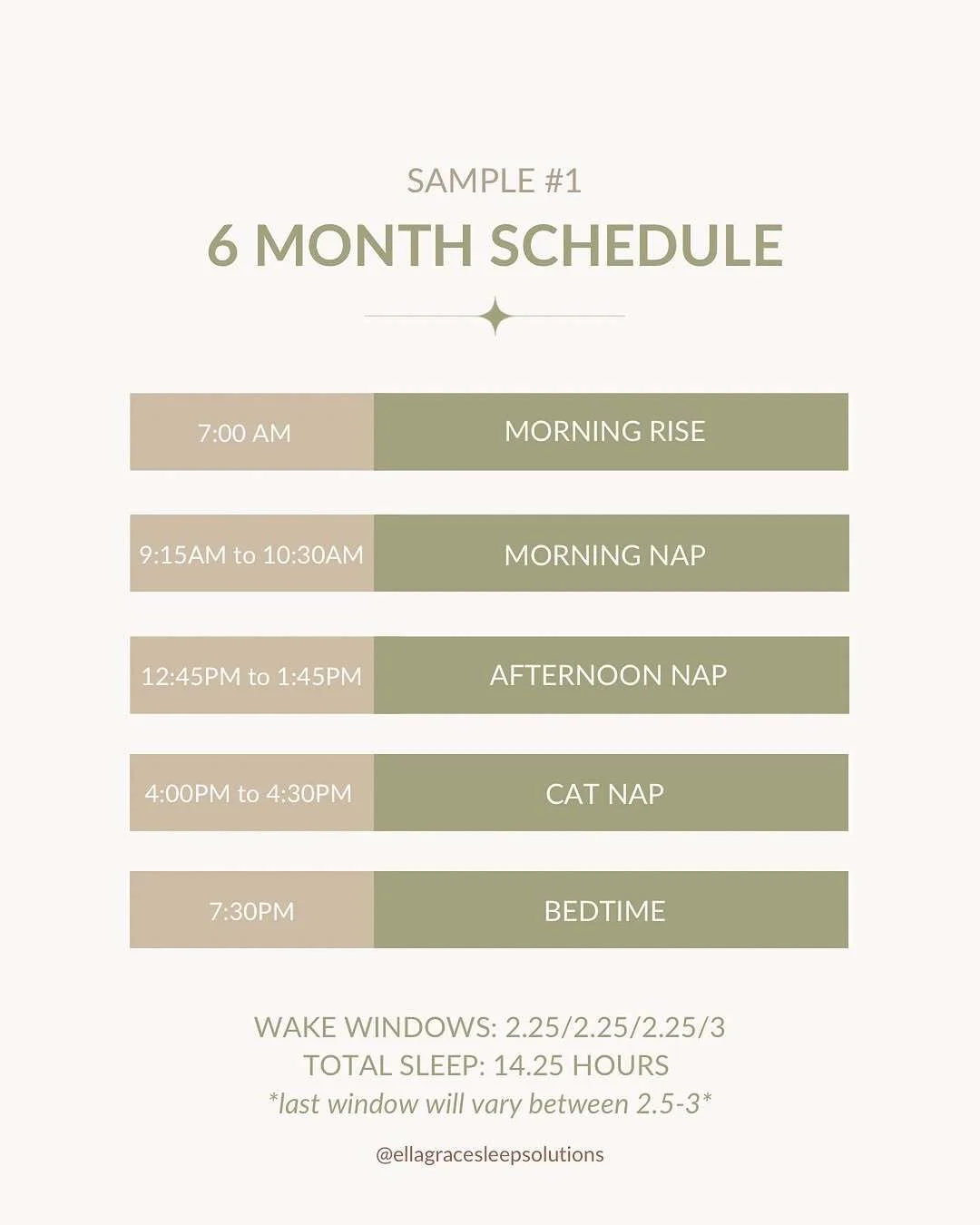
Sleep Schedule Sample 1:
Wake up: 7:00 AM
Nap 1: 9:30 - 10:30 AM
Nap 2: 1:00 - 2:30 PM
Cat nap 3: 4:30 - 5:00 PM (Only if they seem tired; this nap can be phased out gradually)
Bedtime: 7:30 PM
Wake windows in hours: 2.25, 2.25, 2.25, 3
Total sleep in the 24- hour period: 14.5 hours
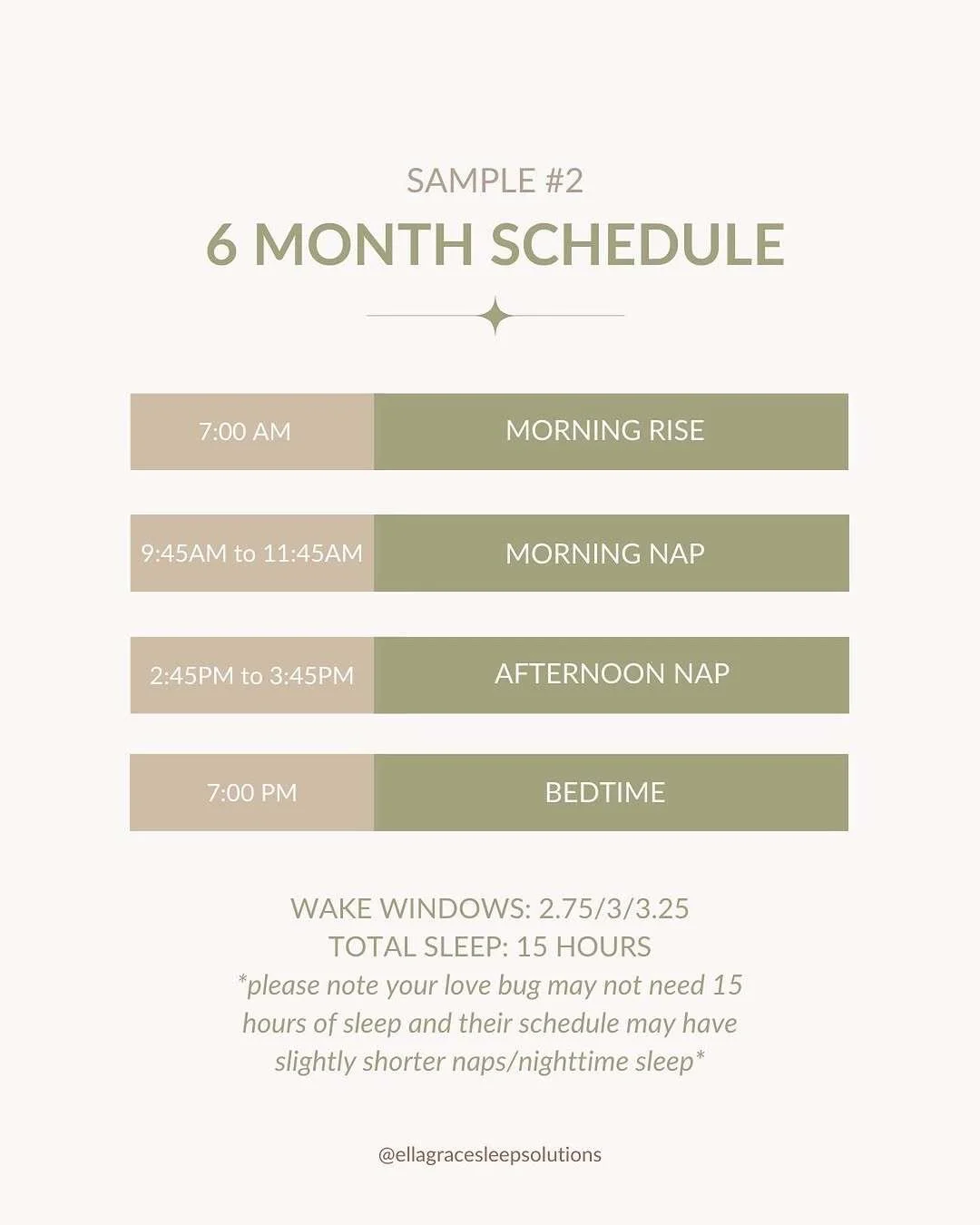
Sleep Schedule Sample 2:
Wake up: 7:00 AM
Nap 1: 9:45 - 11:45 AM
Nap 2: 2:45 - 3:45 PM
Bedtime: 7:00 PM
Wake windows in hours: 2.75, 3, 3.25
Total sleep in the 24- hour period: 15 hours
When should I reach out to a sleep consultant?
Working towards consistent nighttime sleep for your 6-month-old is achievable with an optimized sleep schedule, a consistent sleep time response, and your confidence.
If you've tried adjusting your baby's schedule and sleep environment but your baby is still reliant on your support to fall asleep, I can help you create a personalized plan that fits your baby's needs and your parenting style.
You’ll be in good company with other families I have helped:
“Ella is a magical baby whisperer! We had tried sleep training on our own, but were still struggling with multiple wake-ups throughout the night. Within just two days of working with Ella, our son was sleeping through the night!”
-Samatha Shober
You don't have to wait until you're completely exhausted. Getting support early can make a big difference.
Book a consultation call with me, and let's explore how sleep training can help your whole family enjoy peaceful evenings and rested mornings.
To better sleep,
Ella