
Nightmares vs. Night Terrors: What’s the Difference & What to Do?
Middle-of-the-night scares can be unsettling for parents, especially when you’re half-awake and trying to make sense of what you’re seeing or hearing.
Is it a nightmare?
A night terror?
Should you go in?
Wake them up?
Offer comfort or stay back?
Call your pediatrician?
From the monitor, nightmares or night terrors can look and sound similar. But what’s happening in your child’s brain and what they actually need from you can be very different.
Although nightmares and night terrors are often lumped together, they’re caused by different sleep states and call for different responses. Understanding that difference can take a lot of the fear and guesswork out of those long nights.
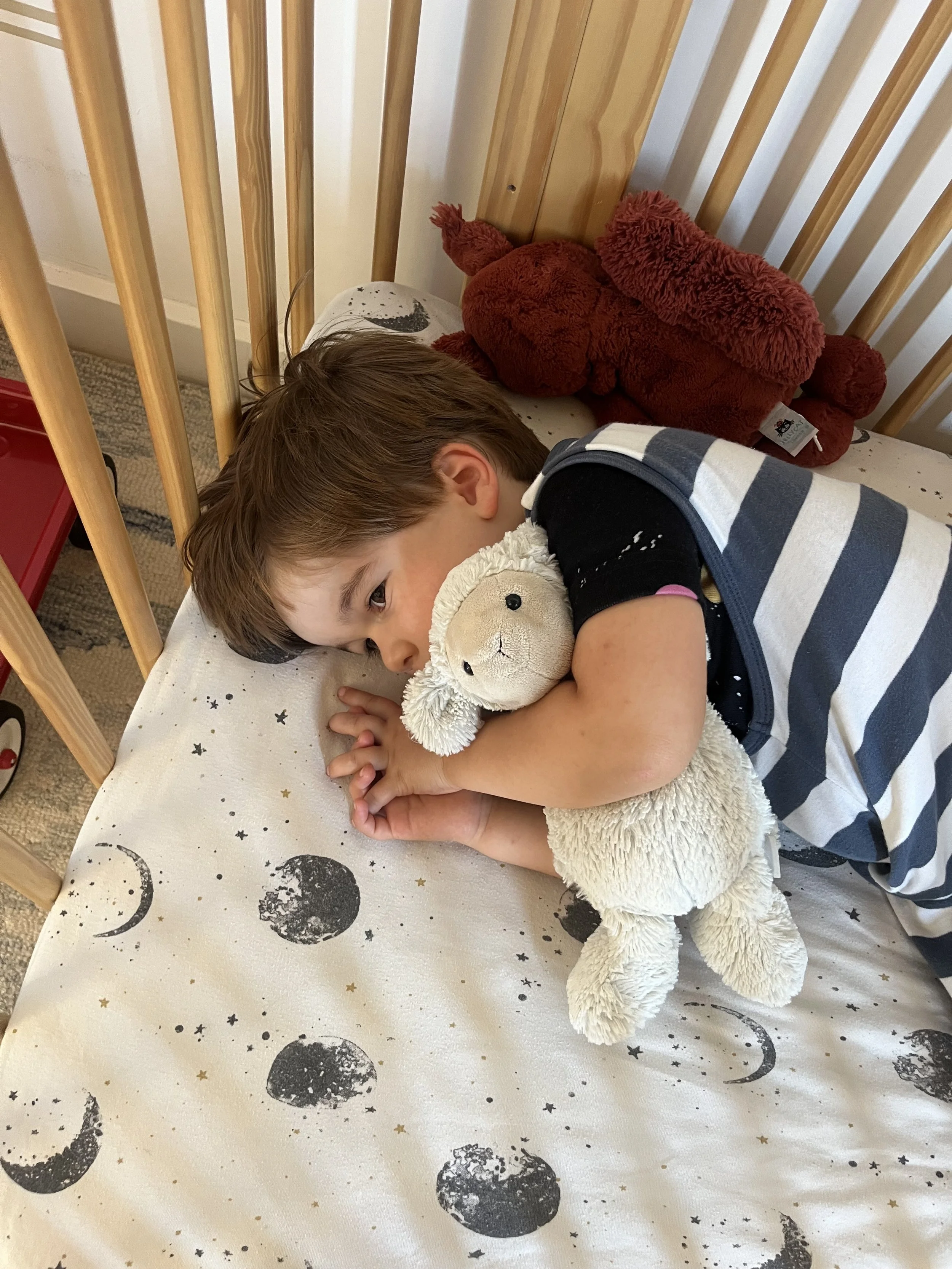
What You Need to Know About Nightmares
Nightmares are bad dreams that happen during REM sleep, the stage of sleep when dreaming occurs. They are a normal part of brain development and emotional processing.
Nightmares typically affect toddlers, preschoolers, and older children. Young babies do not experience nightmares in the way older children do.
What do nightmares look like?
When a child wakes from a nightmare, they are usually:
Fully awake
Scared, startled, or upset
Able to tell you what the dream was about
Seeking comfort and reassurance
A common example is a toddler waking around 5–6 a.m., crying about a scary monster or upsetting dream, and clearly remembering what happened.
Why nightmares happen:
Nightmares often occur because a child’s brain is actively sorting through experiences, emotions, and new information. They can also show up more frequently when a child is overtired.
Tired kids may crash hard, but that doesn’t always mean they sleep well.
Busy days with lots of stimulation (daycare, swim lessons, gymnastics, long outings, skipped naps) can increase the likelihood of nightmares.
Are nightmares normal in children?
Yes, nightmares are a normal part of childhood (and adulthood.) They often become more common between the ages of 3 and 6 as children’s brains and imaginations develop. Experts estimate 10-50% of children between these ages experience nightmares.
How to respond to a nightmare:
A child who just had a nightmare will respond well to comfort. Your goal is to help your child feel safe and grounded.
Helpful responses include:
Calm reassurance: “That was a dream. You’re safe. I’m right here.”
Physical comfort, like a hug or gentle pressure
Keeping the interaction brief and soothing rather than turning it into a long conversation
Turning on a dim red light if needed
Once your child is calm, gently guide them back to sleep.
The next morning, you can allow them to talk about the dream if they want to. Sometimes talking it through can help your child see that dreams aren’t real life and they don’t need to be afraid at bedtime. But don’t push it if they don’t have anything to share.
How to prevent nightmares:
Limit screens for at least 90 minutes before bedtime.
Be mindful of the media your child is exposed to and remove anything that isn’t age-appropriate.
Avoid checking under the bed or in the closet for monsters– this can unintentionally signal that the fear is real.
If nightmares are frequent, you might want to experiment with an earlier bedtime, especially after particularly active days.
Is Your Child Experiencing Night Terrors?
Night terrors are episodes of partial arousal from deep non-REM sleep. They aren’t dreams. They tend to happen early in the night and are far more distressing for parents than for children.
They most commonly affect children between 3 and 6 years old, though they can occur anytime from age 1 through adolescence. Only about 3–6% of children experience them, which is why it’s important to identify them correctly and differentiate them from nightmares.
What do night terrors look like?
During a true night terror, a child may:
Sit up suddenly and scream.
Thrash or appear panicked.
Seem awake but not truly responsive.
Push you away or become more upset if you try to comfort them.
After a few minutes, they usually settle on their own and return to sleep without fully waking up.
Importantly, your child has no memory of the event the next morning. Even though the night terror is unsettling for you, there’s a small comfort in knowing that your child will not remember it.
An example is a child who falls asleep around 7 p.m. and has an episode between 8–10 p.m., appearing terrified but still mostly asleep. Then, they wake up the next morning as if nothing happened.
Are night terrors a sign of a mental health condition?
Not usually. Most childhood night terrors are a normal developmental sleep phenomenon. However, night terrors are strongly linked to autism and if your child is experiencing frequent or severe episodes, you should consult with a pediatrician.
Why night terrors happen:
Night terrors are commonly linked to overtiredness or accumulated fatigue, but some studies do suggest that there is a strong genetic link, meaning some children are simply more predisposed.
However, things like sleep loss, sickness, or stress tend to bring night terrors to the surface.
How to respond to a night terror:
As hard as it is, the best approach is often not to intervene.
During a night terror:
Do not wake your child.
Keep them safe– thrashing or jerking have the potential to cause an injury, so make sure they are safe from any falls or hard hits.
Stay nearby and let the episode pass.
Most episodes last 5–20 minutes and resolve on their own. If the night terror episodes are persisting longer than 20 minutes or involve drooling, stiffening, or violent jerking, you should consult your pediatrician.
How can you reduce night terrors?
Evaluate your child’s total sleep– are they consistently getting enough during the day and at night?
An earlier bedtime can make a significant difference.
Maintain a predictable routine and stable sleep schedule.
Night terrors can feel intense and alarming, but they are not harmful. Night terrors typically fade as a child matures, around age 12 or 13
When to Take a Deeper Look at Your Child’s Sleep
Whether you’re dealing with nightmares or night terrors, if they’re occurring night after night for a couple of weeks instead of just occasionally, you might want to take a closer look at:
Total sleep in a 24-hour period – children who aren't getting enough sleep throughout the day and night may be more likely to experience nightmares or night terrors.
Bedtime timing – late bedtimes and overtiredness can make it harder for children to settle into restful sleep.
Daytime overstimulation – busy days filled with excitement, screen time, or emotional stress can make it more difficult for a child's brain to fully relax at bedtime.
Overall schedule consistency – irregular sleep schedules, skipped naps, or frequent changes to daily routines can disrupt sleep patterns.
Your child’s diet – heavy or sugary foods close to bedtime have been known to trigger nightmares or poor sleep.
Small adjustments can have a big impact over time, and you can always consult your child’s pediatrician if you have concerns about recurring sleep disruptions.
Take a Deep Breath
You’re doing a great job.
Sleep challenges are rarely about “doing something wrong.” More often, they’re about understanding what your child’s needs are and responding in a way that supports everyone’s rest.
If you're looking for some guidance on how to achieve better rest for the whole family, you can find my most requested FREE sleep resources HERE.
To better sleep,
Ella