
Sleep Training for Brooklyn Families: Does In-Home Support Matter?
Even in the city that never sleeps, parents and babies will always need sleep, and if you’re a tired new parent in Brooklyn, chances are you’ve wondered if a Mary Poppins-esque sleep fairy can teach your baby to sleep through the night.
The world of baby sleep can feel overwhelming, especially in New York City where families are often balancing small apartments, busy schedules, limited family support, and the pressure of functioning at work on very little sleep.
So instead of endless googling, the real question might be:
Is an in-home sleep coach the right fit for your family?
Let’s talk about the common questions I get from my sleep training clients here in Brooklyn and break down what exactly you’ll get with in-home sleep coaching in NYC.
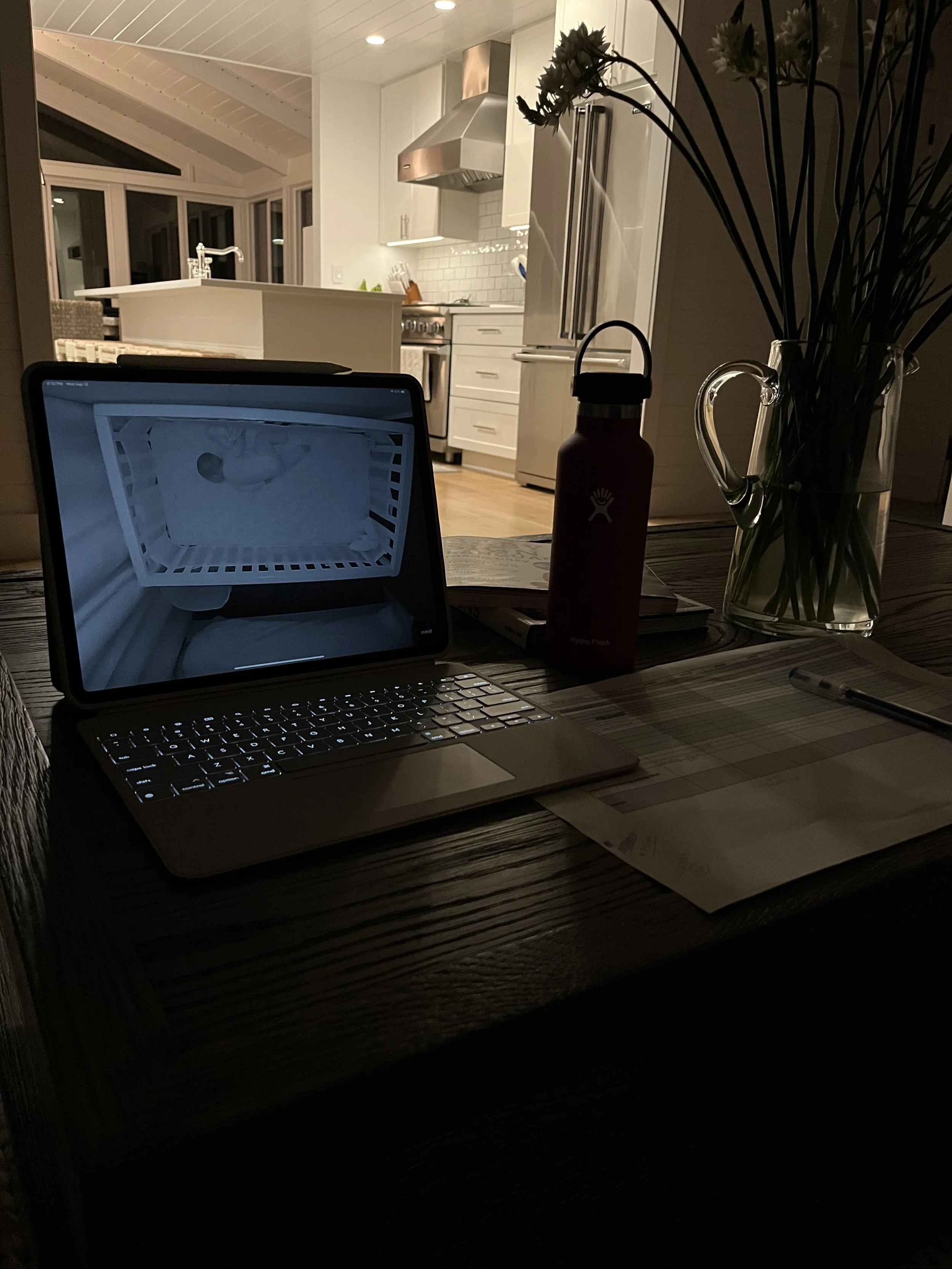
What is sleep training?
Sleep training is the process of helping your child learn to fall asleep independently in their crib. It's letting your child practice and eventually master:
Falling asleep in the crib inde
Falling back to sleep through the night
During sleep training, we encourage your baby to do more and more of the settling to sleep process on their own, while you do less and less.
Contrary to popular belief, sleep training is not about eliminating all night wakings. All humans have partial arousals and stir throughout the night, so we can’t expect baby sleep to be perfect.
The goal is helping your child develop the skills and confidence to settle back to sleep when those normal wakings occur.
Will sleep training help my baby sleep through the night?
When babies learn to fall asleep independently, they become more capable of connecting sleep cycles throughout the night. Instead of needing:
Rocking
Feeding
Bouncing
Being held
They begin using their own settling skills to return to sleep. This usually looks like:
More consolidated sleep
Fewer prolonged night wakings
More predictable sleep patterns
Better-rested families (yay!)
Why is sleep training especially important for Brooklyn families?
Sleep is a basic human need for babies and parents alike. While that's true no matter where you live, life in Brooklyn is busy, social, and full of opportunities to be and about.Better sleep makes your nights easier and gives your family more freedom during the day.
Whether you're planning a trip to the zoo, meeting friends in Prospect Park, or finally getting dressed up for a date night, it's much easier to hand bedtime over to a trusted caregiver, make plans confidently and enjoy your time as a family when your baby has a predictable sleep schedule.
Beyond the flexibility, the benefits of healthy sleep affect every part of family life. Well-rested babies are happier, more alert, and better able to learn and regulate their emotions. Well-rested parents have more patience, better mental health, and more capacity to enjoy this season of parenthood, and that’s really what it’s all about! We want the entire family to thrive, not just survive.
What are my sleep training options?
There is no single "best" sleep training method because all families and all babies are different, but the most common approaches include:
Extinction
Process: Often referred to as “cry it out,” where the parents put their baby in the crib at bedtime and leave the room, allowing baby to fall asleep with no intervention.
Best for: Babies who get more frustrated with settling support from parents. Parents who have tried more hands-on support that baby is not responding to.
Timeline: Progress is usually seen every 3 days, with the routine settling in after the first week. Keep in mind that 5-10 minutes of crying at bedtime or some light stirring throughout the night can be normal at the end of two weeks.
Timed check-ins
Process: Parents put their baby in the crib at bedtime and leave the room, providing regular reassurance, usually in increments of 5-15 minutes. Reassurance can be shushing, singing, patting or sometimes involves picking up and putting down.
Best for: Parents are comfortable with some crying and provide support along the way.
Timeline: Usually 3-10 days
Chair method
Process: Parents put their baby in the crib at bedtime and remain present in a chair by the crib until the child falls asleep. Parents offer both verbal and physical reassurance then gradually reduce this support over time.
Best for: Babies who respond well to parental settling support (shushing, singing, or patting). Great for parents who want to stay close or families moving away from bed-sharing.
Timeline: Parents can graduate out of the room after 2-5 days. Usually takes 2 weeks to move to fully independent sleep.
No method (or age, to add to that) is magic. Success comes from understanding the root cause of disruptive sleep patterns, optimizing your nap/feeding schedule, and consistently following a sleep training approach that works for your family.
Can you sleep train for naps and nights together?
You can, and many families do! But that said, the right approach depends on the baby and the parent’s goals.
Most babies are ready to start sleep training for naps around 5 months old, as they can transition to a clock-based three nap schedule. Before five months old, naps are more inconsistent, which can make nap training frustrating for everyone.
The decision to sleep training for naps and nighttime depends on:
Baby's age
Current sleep habits
Family goals
Parent’s capacity for change
Every baby is different. Sometimes my honest advice to families is “I don’t think we’re ready for nap training yet,” and that’s ok!
Can you sleep train a newborn?
The short answer is no, but there are things you can do to support better newborn sleep. What parents can do during the newborn stage is begin laying the foundation for healthy sleep habits.
Prioritize full feeds- Hungry babies don't sleep well. Ensuring your baby is getting full, efficient feeds during the day will help support longer stretches of sleep overnight.
Help them differentiate day and nighttime- Giving your newborn plenty of exposure to natural sunlight during the day and dimming the lights during the evenings helps support their circadian rhythm.
Create a simple evening routine- Newborns don't need elaborate bedtime routines. A feed, diaper change, pajamas, cuddles, and dim lights signal that nighttime is approaching. An evening routine can also be very helpful mentally for parents!
Accept that babies want to be close- Many newborns sleep beautifully in arms, carriers, strollers, or on your chest, and this is TOTALLY NORMAL. In fact, fighting for a crib or bassinet nap often isn’t worth it in those early days.
What is the best age to sleep train?
There isn't one perfect age, only the age that makes the most sense for your baby, your family, and your goals.
Sleep training at 3 months old can be appropriate for families, as long as you have the right expectation. At three months, you can’t always expect no night feeds or a predictable clock-based nap schedule. But you can expect solid stretches of night sleep, independent sleep skills, and evenings to yourselves when sleep training at 3 months old.
By 5 months old, babies are generally able to get their caloric needs during the day which means they can sleep through the night without a feed.
What's the difference between a night nurse and an overnight postpartum doula in Brooklyn?
Both provide overnight support, but their roles are quite different.
A night nurse is primarily focused on the baby, while an overnight postpartum doula supports both the baby and the parents.
Postpartum doulas often receive specialized training in:
Breastfeeding and lactation support
Maternal recovery and postpartum healing
Emotional and practical support for new parents
Evidence-based newborn care and development practices
Many families describe a postpartum doula as someone who "holds the baby and holds the parents." They're there to answer questions, provide reassurance, help troubleshoot feeding challenges, and support the entire family as they adjust to life with a newborn.
Will a night nurse or postpartum doula help with sleep training?
Newborns can’t be sleep trained but a night nurse or postpartum doula will establish good sleep habits that ensure your baby (and you!) gets the best sleep possible, as early as possible.
What does a virtual sleep consultant look like for Brooklyn families?
Virtual support works beautifully for many families. Through personalized plans, sleep logs, messaging support, and phone calls, families can receive the expert sleep guidance they need to improve sleep.
Virtual sleep support can help with:
Establishing an independent sleep routine
Reducing or eliminating night feeds
Helping your baby sleep through the night
Creating a predictable sleep schedule
For many families, it’s exactly what they need.
What does an in-home sleep coach look like for Brooklyn families?
Having a calm, knowledgeable sleep consultant by your side changes everything. There’s less anxiety, a deeper understanding of your baby and real-time support. An experienced sleep consultant can observe:
Bedtime routines
Parent-child interactions
Feeding dynamics
Sleep environment
Real-time sleep challenges
An in-home baby sleep coach removes the guesswork. Instead of wondering if you're doing it right, you have a professional guiding you in the moment.
Families often find this especially valuable when:
They feel anxious about sleep training/crying
Previous attempts haven't worked
They want hands-on guidance
Their child has a more complex sleep history
Ella Grace Sleep Solutions offers both virtual and in-home sleep support for families throughout:
Brooklyn
Manhattan
Queens
Westchester County
In-home sleep training includes:
Bedtime visits (~3 hours)
Overnight visits (~12 hours)
Your entire family deserves quality sleep. Learn more about NYC in-home sleep support, and let’s find a more sustainable, restorative sleep routine that feels peaceful for the whole family.
To better sleep,
Ella