
Pack ’n plays (also called travel cribs) are one of the most practical baby sleep spaces out there. They’re portable, safe for sleep when used correctly, and can work beautifully for both travel and everyday life at home.
And honestly, many babies sleep incredibly well in them!
Whether you’re trying to decide between a crib or a pack ’n play, wondering if your newborn can nap there safely, or figuring out the best option for a toddler while traveling, here’s everything you need to know about sleeping in the Pack ‘n Play.
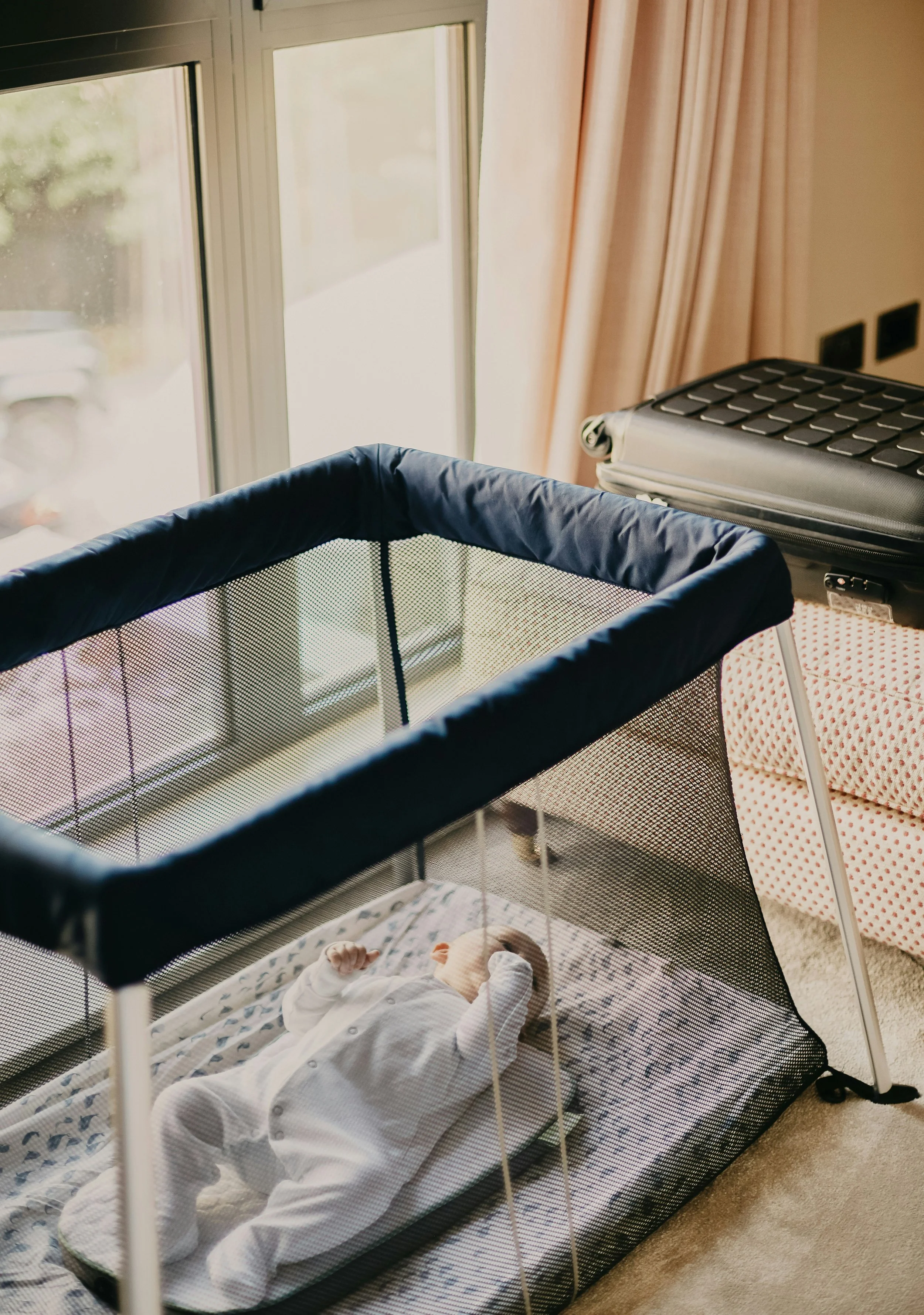
Are pack ’n plays only for travel?
Not at all! Despite the nickname “travel crib,” a pack ’n play can absolutely be your baby’s primary sleep space at home.
Many families use one:
In their bedroom during the newborn phase
A larger “bassinet” in parent’s bedroom when your baby outgrows their first bassinet
In smaller apartments
For naps downstairs
At grandparents’ houses
Full-time instead of a crib
They’re versatile, easy to move around, and especially helpful during those early months when babies sleep frequently throughout the day and night.
Is a crib better than a pack ’n play?
A crib isn’t necessarily better for sleep, but might be a better fit for certain families.
A standard crib usually has:
More space
A thicker, more comfortable mattress
A more permanent setup
Pack ’n plays have:
A thinner, firmer sleep surface
Smaller dimensions
Greater portability and flexibility
From a sleep perspective, many babies do completely fine in a pack ’n play. Especially younger babies.
Babies are very adaptable when the sleep environment is supportive and consistent, and the pack ‘n play can provide that. And while adults may look at the thin mattress and think, “That doesn’t look comfortable,” babies actually sleep safest on firm sleep surfaces.
Is it okay for a baby to sleep in a pack ’n play overnight?
Yes, of course! Babies can safely sleep in a pack ’n play overnight.
The key to safe pack ‘n play sleep is making sure it’s:
Properly assembled
Used according to manufacturer guidelines
Free from added bedding or accessories that aren’t approved
Safe sleep basics still apply regardless of where baby sleeps:
Baby sleeps flat on their back
Use only the included mattress
No pillows, blankets, bumpers, or stuffed animals during infancy
Use a fitted sheet specifically designed for the model
For warmth, a sleep sack is a safer option than loose blankets during the first year.
Is it safe for babies to nap in a pack ’n play?
Yes. Naps and nighttime sleep are both perfectly safe in a pack ’n play. In fact, many babies nap beautifully in a pack ‘n play, especially once they move into more predictable daytime sleep rhythms.
That said, newborn sleep is its own thing.
In the early weeks, it’s completely normal if your baby prefers:
Contact naps
Carrier naps
Stroller naps
Sleeping close to your body
Babies crave proximity and closeness as a biological norm. A newborn refusing every pack ’n play nap doesn’t mean you bought the wrong one, it just comes with the newborn territory.
As babies get older, naps and sleep training for naps in the pack ’n play usually become easier and more consistent.
Can you use a pack ’n play instead of a crib?
Absolutely. Both cribs and pack ’n plays are considered safe sleep spaces when used correctly.
If you’re using a pack ’n play as a long-term sleep setup:
Lower the mattress setting once baby begins rolling or pushing up
Keep the sleep space minimal and uncluttered
Follow the height and weight recommendations for your specific model
For many families in apartments, shared spaces, or frequent travel situations, a pack ’n play works beautifully as a primary sleep setup! If the pack ’n play is your child’s consistent sleep setup, it will be easy to support their sleep when traveling across timezones.
How long can a baby sleep in a pack ’n play?
Most babies can comfortably sleep in a pack ’n play until around age 2–3, depending on:
Height
Weight
Mobility
The dimensions of the model
Some toddlers outgrow them earlier simply because they’re tall. Pack ’n plays are often shorter than standard cribs, so length becomes the biggest factor over time.
How many hours can a baby sleep in a pack ’n play?
All the hours! A baby can safely do all sleep, naps and nighttime, in a pack ’n play.
For older infants, that may look like:
10–12 hours overnight
2–4 hours of daytime sleep
For newborns, sleep is much more fragmented and less organized. They may still benefit from a mix of:
Pack ’n play sleep
Contact naps
Carrier naps
Stroller walks
That’s very normal when beginning to establish a newborn routine.
Which pack ’n play is best?
There are several great options depending on what your family needs.
Best for travel
These are lightweight, easy to carry, and ideal for flying or moving around often.
Most comfortable mattress
Parents love the breathable mattress design and larger size.
Best looking in the home
Aesthetically, this one blends beautifully into living spaces. And also very cozy!
Best for growing into toddlerhood
It’s one of the biggest options on the market, making it ideal for taller babies and toddlers.
Which pack ’n play is the biggest?
Here’s how some popular models compare:
Newton - 51” x 34.5” x 28.5”
Guava Lotus - 45.5” x 31.5” x 25.5”
BabyBjörn - 44” x 32” x 24”
Nuna Sena - 41.3” x 30” x 29”
UPPAbaby Remi - 40.5” x 26” x 28.5”
For taller toddlers, the Newton is the roomiest option.
How can you make a pack ’n play more comfortable?
I know it doesn't always look super comfortable, but the safest setup is also the simplest one.
For babies under one year:
Use only the original mattress
Add a fitted sheet
Dress baby appropriately for warmth
No mattress toppers, no added padding, and no blankets tucked underneath. A sleep sack is the safest way to keep babies warm and comfortable during infancy (I recommend transitioning from swaddle to sleep sack around 8 weeks, or when your baby starts to show signs of rolling).
After age one, many families choose to introduce:
A small blanket
A comfort item or stuffed animal
But before then, simplicity is safest.
Can toddlers sleep in a pack ’n play?
Yes. Many toddlers sleep well in pack ’n plays during travel, but eventually, most toddlers outgrow them physically, especially if they’re tall or very active sleepers.
When your toddler out grows the pack ’n play, families often transition to:
A full-size crib or toddler bed
A floor bed while traveling
A hotel rollaway cot while traveling
If your toddler is sleeping in a regular bed while traveling, placing pillows underneath the fitted sheet near the edges can help create a softer boundary and reduce rolling out.
Pack ’n play FAQs:
-
Yes. Newborns can safely sleep overnight in a properly assembled pack ’n play.
-
Not necessarily. Many babies sleep just as well in them as they do in cribs, especially when the sleep environment is consistent and supportive.
-
Yes, as long as they still fit comfortably and safely within the size limits.
-
No. Firm mattresses are actually safest for infant sleep. It’s not as comfortable as a full-size mattress in a crib but it’s comfortable enough!
-
Yes. Many families use them full-time through infancy and toddlerhood.
-
Once your baby begins rolling or pushing up, the mattress should move to the lowest setting.
The verdict on pack ’n plays:
They’re safe, practical, travel-friendly, and apartment-friendly. And for many babies, they work wonderfully for both naps and nighttime sleep.
And whether your baby sleeps in a pack ’n play or a crib, the most important thing is that their sleep space is safe, your baby is well rested, and your sleep setup works for your real life.
Whatever your sleep setup is, my most requested sleep resources will help you get closer to longer stretches of sleep and brighter mornings.
To better sleep,
Ella